
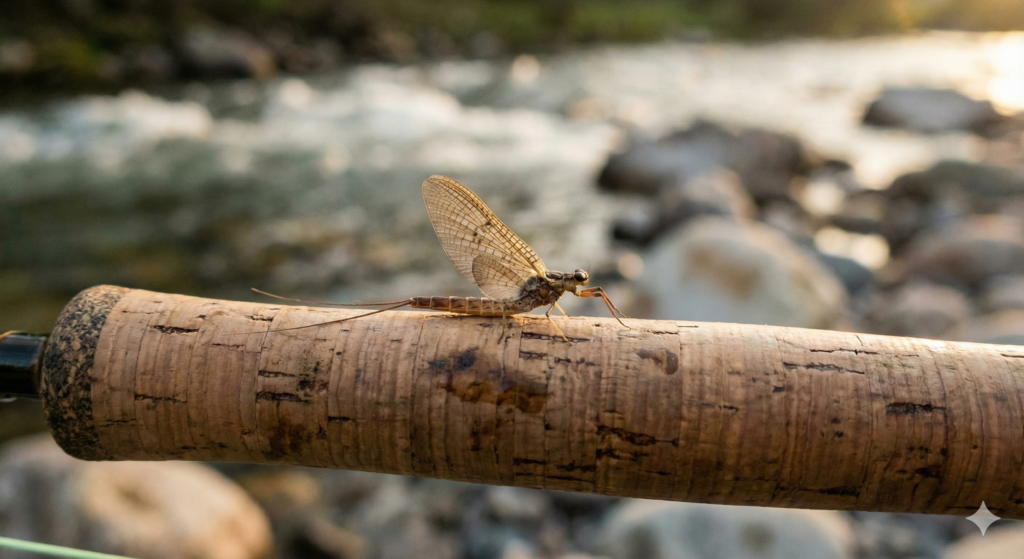
Climbers verify the weather forecast before a summit push. Anglers verify the hatch.
In the high alpine, biology is stripped down to the essentials. You don’t need a degree in Latin or a box with 500 different patterns. The ecosystem at 2,000 meters is harsh, short-lived, and predictable.
If you are transitioning from the rock to the river, stop overthinking it. You aren’t matching a hatch on a pressure-cooked English chalk stream. You are feeding opportunistic trout in a nutrient-poor environment.
Here is your field guide to the “Big Three” of alpine fly fishing flies.
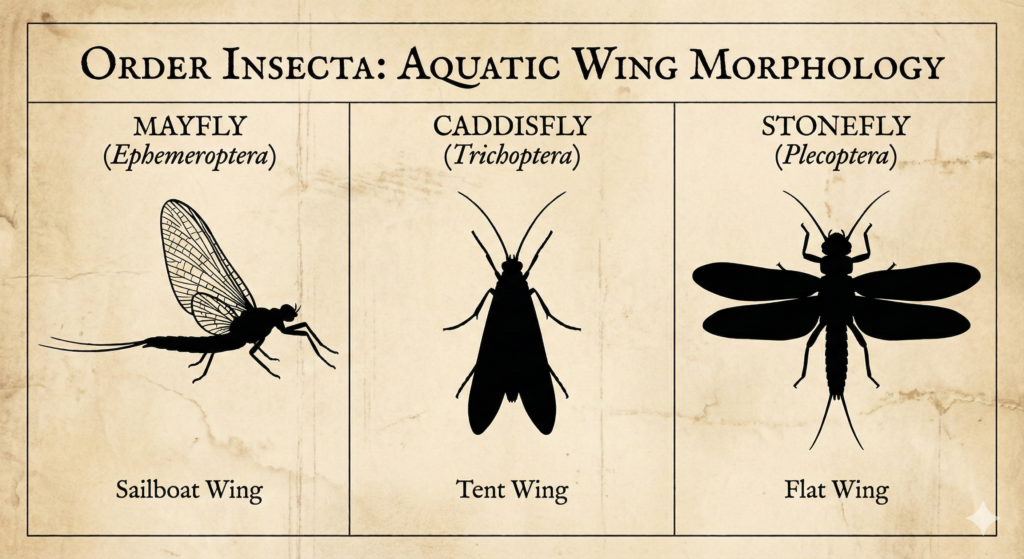
1. The Mayfly (The Sailboat)
You have seen these. They look like tiny sailboats drifting on the current.
In the mountains, they are usually small and dark (Blue Winged Olives). When you see noses breaking the surface of the water in a rhythmic pattern, they are likely sipping these.
The Climber’s Analogy: Think of Mayflies like a “friction slab.” They are delicate, technical, and require precision.
- Recognition: Upright wings, long tails.
- The Tactic: Use a “Parachute Adams.” It’s the multi-tool of dry flies.
2. The Caddis (The Tent)
Caddisflies are the chaotic punks of the river. They don’t drift gracefully; they flutter, skitter, and crash onto the water.
When they are at rest, their wings fold back like a pup tent.
The Tactic: This connects directly to our previous guide on Reading Water for Trout. Because Caddis move fast, fish often chase them into the “Seams” we discussed. You don’t need a perfect drift here. A little movement is good.
3. The Stonefly (The Steak Dinner)
If Mayflies are a snack, Stoneflies are a ribeye steak.
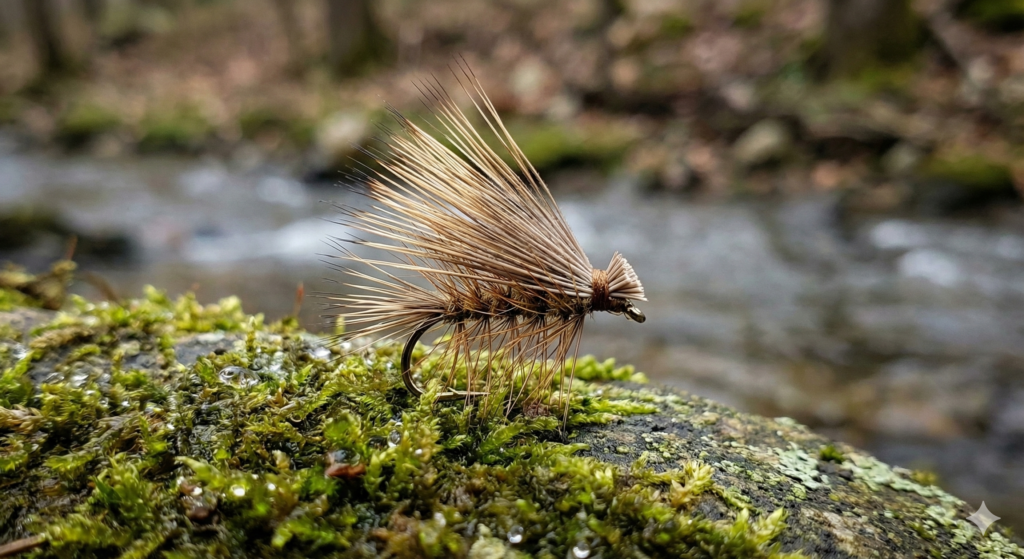
These are massive prehistoric-looking bugs. In the early season (June/July), big Golden Stoneflies hatch in the mountains. Trout will move three feet across a pool to smash one of these.
The Climber’s Analogy: This is the “Jug Haul” of fishing. Big holds, easy moves, high reward.
- Recognition: Flat wings, two tails, clumsy flight.
- The Tactic: Tie on a big “Stimulator” pattern. It floats like a cork and supports heavy dropper rigs.
What About “Matching the Hatch”?
Don’t get paralyzed by color.
In fast mountain water, the trout has about 0.5 seconds to decide whether to eat or starve. Shape and Size matter 90% more than color.
- Silhouette: Does it look like a sailboat (Mayfly) or a tent (Caddis)?
- Size: Is it a size 12 (big) or a size 18 (tiny)?
Get those two right, and the fish won’t care if your shade of olive is slightly off.
The Next Move
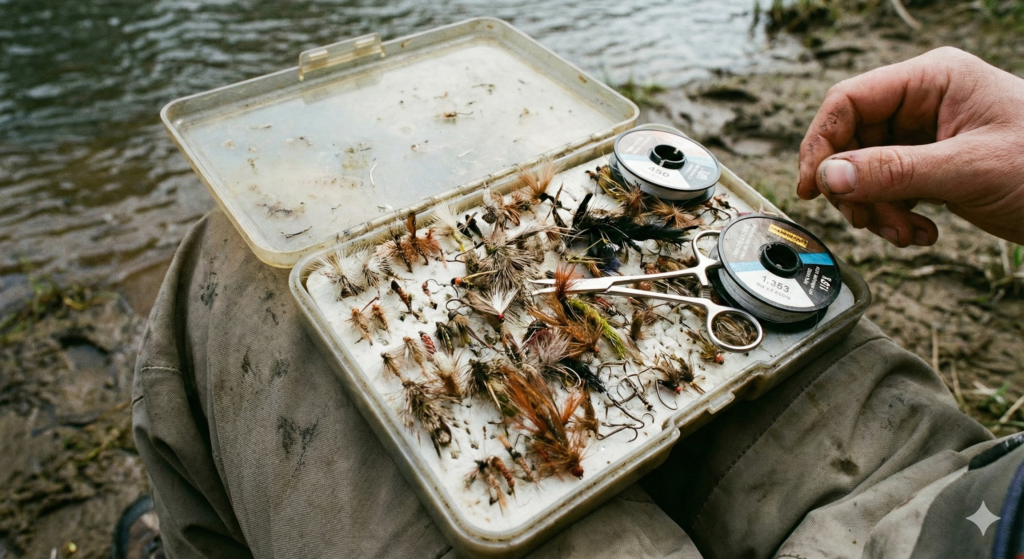
Now you know the biology. But a fly is useless if you can’t put it where the fish lives.
You need to understand the “Hydraulic Cushions” and energy barriers that dictate where trout hold. If you haven’t mastered that yet, go back and study our guide on Reading Water for Trout: A Climber’s Guide.
Biology plus Physics equals dinner.